Pay in installments of $7.45 with
 ,
,
 and
and

Shipping Estimate
USA
- USA
- CAN
- USA
- CAN
Ships within 48 hours · Estimated delivery Jun 29 - Jul 4
 Promo Codes Available:
For Your Every Summer RSVP, with Code: SUMMER15
Description
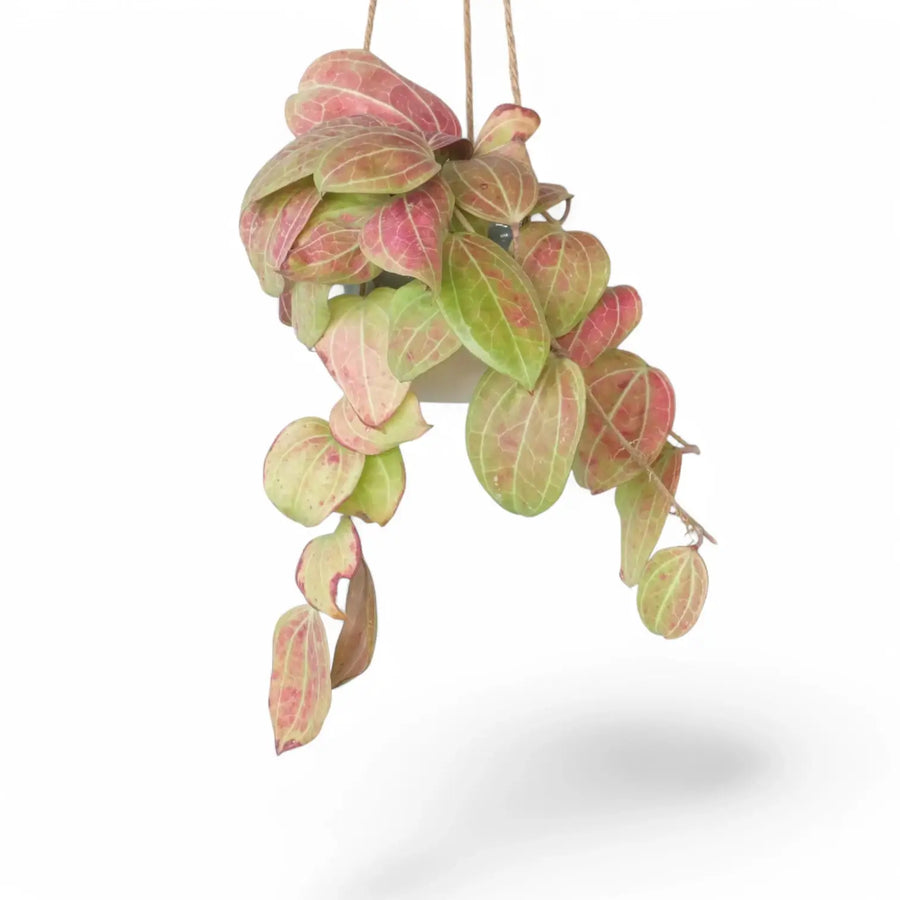
globulosa succulent Hoya globulosa – Velvety Leaves & Spherical BloomsHoya globulosa velvety Himalayan climber with perfectly spherical blooms Hoya globulosa is a distinctive, cool growing species native to the eastern Himalaya mainly Sikkim in northern India, with populations also recorded in Myanmar, southwest China, Laos and northern Thailand. It belongs to Hoya section Eriostemma, a group known for softly hairy foliage and globe shaped flower clusters. Collectors prize this species for its sculptural leaves: large,
Hoya globulosa – velvety Himalayan climber with perfectly spherical blooms
Hoya globulosa is a distinctive, cool-growing species native to the eastern Himalaya – mainly Sikkim in northern India, with populations also recorded in Myanmar, southwest China, Laos and northern Thailand. It belongs to Hoya section Eriostemma, a group known for softly hairy foliage and globe-shaped flower clusters.
Collectors prize this species for its sculptural leaves: large, rippled and faintly fuzzy to the touch, each with a deep network of contrasting green veins. Even before it blooms, Hoya globulosa looks like a living piece of textured art – tactile, elegant and unmistakably different from smooth-leafed species.
Growth and structure of Hoya globulosa
This is a twining, epiphytic climber that forms strong, semi-woody vines capable of stretching several metres when supported. Young shoots are densely covered with short, fine hairs, giving the plant a silvery sheen under good light. Internodes typically range from 10–15 cm, and stems become slightly woody with age.
Leaves reach around 11–13 cm in length and 5–9 cm in width, with softly undulated edges – the trait that once earned it the trade nickname “wavy-leaf Hoya.” Petioles are about 2 cm long and stay faintly hairy even on mature growth. As leaves age, the upper surface smooths slightly while retaining prominent, net-like venation.
In its natural range between roughly 800–1800 m elevation, Hoya globulosa clings to moss-covered trunks or rocks in misty montane forests. These habitats stay bright but never harshly sunny, cool at night and constantly aerated – the same conditions that bring out the best in cultivation.
Flowers and scent of Hoya globulosa
Once established – usually two to three years from cutting – Hoya globulosa produces impressive, pendulous umbels of 20–30 creamy white flowers. Each globe-shaped cluster hangs on a peduncle about 7–10 cm long. Individual blooms measure roughly 1.3 cm across, with short, reflexed lobes that give the cluster a near-perfect spherical symmetry.
The inner corona is blush-pink near its base, adding gentle contrast to the pale corolla. Flowers are softly fragrant, releasing a light honey-and-spice aroma in the evening – an adaptation to moth pollinators in its native range. Each bloom lasts around five to seven days, and umbels continue to open successively throughout spring and summer.
Cultivation and care for Hoya globulosa
Hoya globulosa thrives when its Himalayan origins are respected: cooler nights, bright filtered light and moving air.
- Light: Bright, indirect light or gentle morning sun encourages firm, richly veined foliage and reliable flowering.
- Temperature: Prefers 18–24 °C days and slightly cooler nights; tolerates brief dips to about 15 °C.
- Watering: Let the upper 2–3 cm of substrate dry before watering again. Avoid keeping it constantly wet – hairy leaves resent trapped moisture on surfaces and at the crown.
- Substrate: Use a very airy mix of fine bark, perlite and sphagnum or coco chips to mimic epiphytic roots.
- Humidity: 50–70 % is ideal; ensure good airflow to prevent fungal spotting on leaves and peduncles.
- Support: Provide a trellis, hoop or hanging basket so vines can climb or cascade naturally.
- Feeding: Apply a balanced, diluted fertiliser every 2–4 weeks during active growth.
Under good conditions, Hoya globulosa blooms reliably each season and often retains its peduncles for repeat flowering.
Taxonomy and related species of Hoya globulosa
American Hoya expert C. M. Burton proposed that Hoya globulosa Hook.f. may be synonymous with Hoya villosa Constantin (1912), described from Laos, Vietnam and Cambodia. Both species share soft, hairy stems, visible venation and similar floral structure. Constantin’s later work accidentally spelled the name Hoya globosa, a typographical error repeated for decades before correction in modern checklists.
Whether treated as distinct or synonymous, Hoya globulosa remains one of the most characteristic members of the Eriostemma group and a cornerstone species for collectors interested in cool-growing Hoyas.
Blooming and seasonal notes for Hoya globulosa
- Blooming season: Mainly spring through early autumn under indoor conditions.
- Flower longevity: Approximately 5–7 days per flower; umbels rebloom from old spurs.
- Maturity to bloom: Expect first flowers roughly 2–3 years from a cutting under ideal light and temperatures.
- Pruning: Trim only dead or tangled growth; avoid removing peduncles as these carry repeat blooms.
- Propagation: Stem cuttings root well in warm, humid air under bright shade, in moss, perlite or similar airy media.
Safety and handling of Hoya globulosa
Like most Hoyas, Hoya globulosa contains a small amount of latex sap, which may cause mild skin irritation if handled extensively. It is not known to be highly toxic to pets, but ingestion should still be avoided. Wash hands after pruning, repotting or handling broken stems.
Etymology of Hoya globulosa
The species epithet globulosa comes from Latin globulus, meaning “small globe,” referring to its spherical flower clusters. Hoya globulosa was first validly described by Joseph Dalton Hooker in 1882 and originally published in Gardeners’ Chronicle I: 732 (1882). It remains one of his most elegant Himalayan introductions.
Why grow Hoya globulosa?
Hoya globulosa combines everything collectors enjoy: texture, geometry and perfume – yet remains manageable indoors. Few Hoyas look this tactile: each leaf feels like soft suede, and the flowers form immaculate spheres that seem almost engineered.
For anyone who enjoys cool-growing Hoyas or wants contrast against glossy species such as Hoya carnosa or Hoya kerrii, Hoya globulosa adds calm Himalayan elegance to a collection.
In short:Hoya globulosa is a velvety, slow-twining species from the misty Himalaya, thriving in bright, cool, airy conditions. With patience and stable care, it rewards growers with flawless globe-shaped flowers and leaves that look hand-carved – a must-have for serious Hoya enthusiasts.
Shipping Notes
- Free Standard Shipping on $100+ Orders to the USA.
- Except Preorder products are shipped in 48 hours.
- Delivery to the USA:
- Standard Shipping : 3-10 business days
- If time is of the essence, please consider selecting expedited delivery for faster service.
Exchange/Return Notes
- We offer a 30-day return/exchange service after receiving.
- Final sale items are not eligible for returns or exchanges.
- To process your return/exchange, please contact us at [email protected]
- Please click here for more details>>> Return & Exchange Policy